UAE Travel Guide for Gulf Readers: Visa, Halal, Family Resorts & Eid Timing
Visa tiers for GCC nationals, four halal infrastructure levels explained, Eid Al Fitr vs Eid Al Adha demand patterns, and family hotel picks across Dubai, Abu Dhabi, Sharjah, RAK, and Fujairah.

Key Takeaways
- GCC nationals (Saudi, Kuwaiti, Qatari, Bahraini, Omani, Emirati) enter the UAE visa-free using a national ID card — no passport required at the border.
- Sharjah is the only UAE emirate where alcohol is banned by law, not hotel policy — the alcohol-free environment requires no pre-arrangement or special room request.
- Eid Al Fitr is the UAE staycation peak (book early; properties fill fast); Eid Al Adha is a departure peak — UAE hotels may be quieter and rates potentially softer.
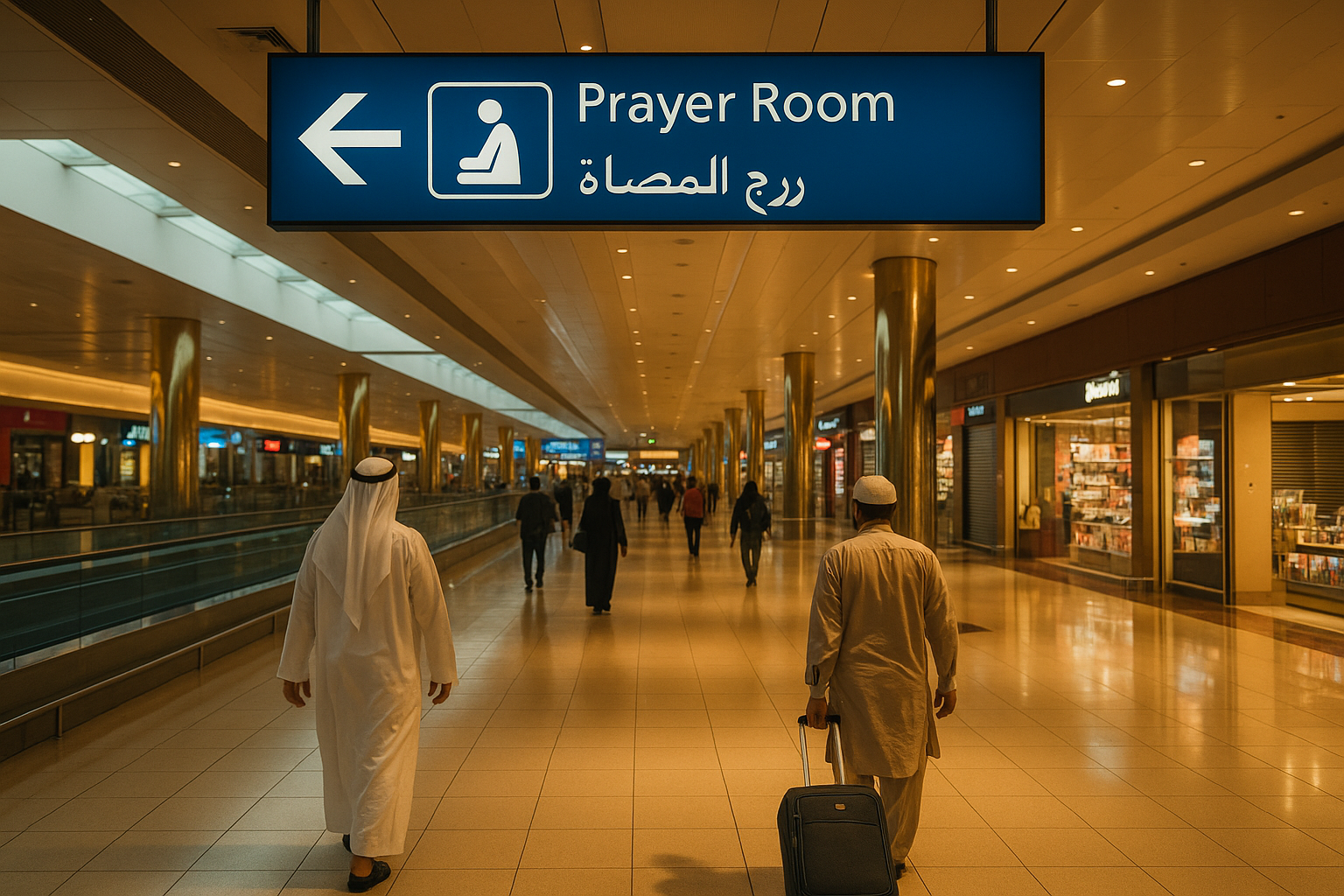
- DXB Terminal 3 has free, 24/7 prayer rooms with wudu and qibla in all three airside concourses: Concourse A near A2–A3, Concourse B near B31, Concourse C via the May I Help You desk.
- “Halal-friendly” at UAE resorts spans four distinct tiers — legally enforced (Sharjah), certified infrastructure (DXB/McDonald’s), available on request (Waldorf RAK), and unverified marketing language (WB Abu Dhabi) — and conflating them produces a mismatched booking.
What You Need to Know First
This guide is for Gulf travelers — GCC nationals, UAE residents holding non-GCC passports, and everyone in between — making a real booking decision about UAE travel. Most UAE travel content gets three things wrong for Gulf readers: it conflates four distinct tiers of halal infrastructure, it treats both Eids as equivalent demand peaks (they are not), and it buries the emirate-by-emirate distinctions that determine whether a trip fits your family. This guide addresses all three.
Entering the UAE: What Your Passport Tier Actually Determines
GCC Nationals
If your passport is Saudi, Emirati, Kuwaiti, Qatari, Bahraini, or Omani, UAE entry is visa-free — and your national ID card is sufficient; you do not need your passport at the border. This is confirmed across three independent institutional sources: Wikipedia citing Henley/IATA data, Emirates airline’s IATA-linked visa tool, and the UAE Ministry of Economy and Tourism’s official entry-requirements page. It is the single most confidently verified claim in this guide. [sources: S1, S2, S25]
Non-GCC Gulf Residents
If you hold a non-GCC passport but live in the UAE or another Gulf country, your entry tier is determined by your nationality, not your place of residence. The sources used to build this guide do not contain the UAE ICP’s tier-differentiated nationality list — the only source that answers this question precisely. Before booking, check UAE entry requirements at UAE MoET or visit icp.gov.ae directly. Do not rely on airline visa tools alone; they treat nationality as the only variable and do not account for residency status.
eVisa Routes
For travelers who require an advance application, the UAE offers eVisa through GDRFA, UAE ICP, and airline-sponsored routes via Emirates, Etihad, flydubai, and Air Arabia, as well as hotel-sponsorship options. [sources: S25, S3]
Getting There: Flights from Gulf Hubs
Dubai (DXB)
Emirates operates from DXB to 100+ destinations and remains one of the most connected hubs for Gulf-originating travel. [sources: S2, S19/S24]
Saudia from Riyadh and Jeddah — Verify Before You Book
As of March 7, 2026, Saudia announced a partial resumption of DXB flights: SV596/SV588 operating Riyadh–Dubai and SV597/SV589 operating Jeddah–Dubai, [per a Saudi Expatriates News report](https://www.facebook.com/SaudiExpatsNews/posts/saudia-has-announced-the-partial-resumption-of-flights-to-dubai-starting march-7/1274556444653105/). [source: S4] This is a sole-source report from a Facebook post, not confirmed by Saudia’s official schedule. Check Saudia.com or Almosafer at the time of booking — do not treat the March 7 announcement as current.
Alternative Entry Points
If you are targeting Abu Dhabi, Yas Island, or the East Coast, consider Abu Dhabi Airport (AUH) via Etihad, or Sharjah Airport (SHJ) via Air Arabia for budget routing. Prayer-room infrastructure at AUH and SHJ is not covered in this guide — check airport official sites before a long layover.
The Four Emirates Beyond Dubai: What Each One Actually Offers Gulf Travelers
Dubai is the default. It does not have to be yours. Each emirate below offers something structurally distinct.
| Emirate | Core proposition for Gulf reader | Primary differentiator | Halal status |
|---|---|---|---|
| Abu Dhabi | Cultural capital + multi-park theme cluster | Ferrari World, Yas Waterworld, WB World, SeaWorld, Disney (announced) | Muslim-friendly by hotel policy; halal certification varies by property |
| Sharjah | UAE’s Islamic and cultural heritage centre | Legally dry by emirate statute — alcohol prohibited everywhere, by law, not by request | Halal-by-law — the only emirate in this guide where the default is legally enforced |
| Ras Al Khaimah | Accessible luxury beach and mountain escape | Quieter than Dubai; overwater villas; Hajar Mountains; mangroves | Halal-by-request at named luxury properties (see below) |
| Fujairah | Gulf of Oman east coast; different sea | Coral reefs, tropical fish, 16th-century fort; ~1.5–2 hrs from Dubai by road | No specific halal infrastructure confirmed in available sources |
Abu Dhabi
The Yas Island cluster — Ferrari World, Yas Waterworld, WB World, and SeaWorld — is the only multi-park theme destination in the UAE. Disney Abu Dhabi has been officially announced as forthcoming; no opening date was confirmed at the time this guide was written. [source: S6] For families, the parks alone justify a two-night stay.
For cultural weight, the Sheikh Zayed Grand Mosque and the Louvre Abu Dhabi are both within reach of Yas Island. [source: S5, Novotel Accor editorial]
Abu Dhabi is driveable from Dubai. The specific drive time is not cited in available sources. [source: S5]
Sharjah
Sharjah is the only emirate in this guide where the halal and alcohol-free environment is a legal default, not a hotel policy. [source: S7, Visit Sharjah / SCTDA official] This is emirate law, not marketing language.
Named attractions: Al Qasba waterway, Khalid Lagoon, the Heritage Area, and the Sharjah Light Festival (reported as 10 days in February, free public event — [source: S8, The Travel Bunny, compensated-trip disclosed]; verify current dates at visitsharjah.com before planning around it).
Honest limit: available sources do not cover Sharjah hotel options or the case for an overnight stay versus a day trip from Dubai. If you are basing yourself in Sharjah rather than passing through, check Visit Sharjah’s official travel essentials for accommodation guidance.
Ras Al Khaimah
RAK’s proposition is luxury with less noise. The Anantara Mina Ras Al Khaimah Resort offers 174 rooms, suites, and overwater villas, a kids’ club, and a separately named teens’ club — making it one of the few UAE properties in this guide with infrastructure designed for adolescents alongside younger children. [source: S9, Anantara official site] Verify current room count and club operating status before booking; this is a commercial source.
On halal infrastructure at RAK luxury resorts: the Waldorf Astoria Ras Al Khaimah is listed by Halal Holidays UK as offering halal food, alcohol-free rooms, and separate prayer rooms — but all three are asterisked as “can be arranged upon request.” [source: S10] None of these are standard amenities. You must pre-request them. This is not Sharjah’s legal default, and it is not the same as a halal-certified property. The Anantara’s halal status is not confirmed in available sources — do not assume it matches the Waldorf’s described infrastructure.
Fujairah
Fujairah sits entirely on the Gulf of Oman coast — not the Arabian Gulf — giving it a structurally different marine environment: warmer water, coral reefs, and tropical fish from Indian Ocean currents. [sources: S11, S12] This is a geographic distinction, not a marketing one.
Getting there from Dubai:
- E88 highway: approximately 1 hour 45 minutes without traffic; the faster route
- E311 to Masafi Road via the Hajar Mountains: 130–160km, more scenic; recommended by Safe Driver UAE [source: S12]
- Leave before 7AM on weekends to avoid traffic on either route [source: S11]
Named snorkel sites: Dibba Rock, Martini Rock, and Sharm Rocks. Al Boom Diving, a PADI 5-Star operator at Le Méridien Fujairah, operates full-day snorkelling trips to Fujairah from Dubai. [source: S13]
Confirmed gap: this guide does not cover Fujairah resort accommodation in detail. Al Aqah beach resorts — Le Méridien Fujairah and Fairmont Fujairah — are the primary options in the area but are not covered by the sources used here. Check each property directly.
Halal and Prayer Infrastructure: The Four Tiers You Need to Know
“Halal-friendly” covers a spectrum from legally enforced to commercially claimed. Before booking, know which tier you are dealing with.
| Tier | What it means | UAE example in this guide |
|---|---|---|
| Halal-by-law | Alcohol prohibited by emirate statute; no arrangement required; the legal default | Sharjah |
| Halal-by-certified-infrastructure | Prayer rooms independently confirmed by multiple sources; halal food at major chains with UAE-standard certification | DXB Terminal 3 (prayer rooms); McDonald’s UAE (halal-certified) |
| Halal-by-request | Halal food, alcohol-free rooms, and/or prayer rooms available — but must be pre-arranged; not standard | Waldorf Astoria RAK [S10] |
| Halal-by-claim | “Halal-friendly” or “halal cuisine” in marketing language; no certification cited | WB Abu Dhabi [S6b] and most UAE resort marketing |
These four tiers are not interchangeable. Booking decisions based on conflating them — particularly Tier 4 with Tier 1 — will produce an environment that does not match your expectations.
Prayer at Dubai Airport (DXB) — Confirmed Infrastructure
DXB Terminal 3 has dedicated prayer rooms in all three airside concourses — A, B, and C — operating 24 hours a day, seven days a week, at no charge. All have wudu facilities, qibla indicators, and separate sections for men and women. [sources: S14, S15, S16 — three independent sources: Airport Terminal 3 guide, Rihaala Muslim travel platform, HalalTrip directory]
Specific locations from S14:
- Concourse A: near Gates A2–A3
- Concourse B: near Gate B31
- Concourse C: ask the “May I Help You” desk for navigation
A landside mosque near the car park is also confirmed. Arrivals-level prayer facilities are present.
This is the most thoroughly verified piece of Muslim-practice infrastructure in this guide.
Halal Food at DXB — A Necessary Qualification
Halal food is widely available throughout DXB terminals, but not all restaurants are formally halal-certified. Some operate on a halal-by-ownership basis — Muslim-owned but without a certification body’s issued certificate. [source: S15, Rihaala] McDonald’s UAE holds UAE ESMA halal certification. If you require formal certification rather than halal-by-ownership, ask to see the certification at the restaurant; do not assume equivalence.
Prayer Infrastructure at Abu Dhabi Airport (AUH) — Gap
This guide does not contain verified prayer-room infrastructure for AUH. If you are transiting through Abu Dhabi Airport, check the airport’s official site before your travel date.
Seasonal Timing: When to Go and What the Demand Patterns Actually Mean
Eid Al Fitr vs. Eid Al Adha — They Are Not the Same
The two Eids produce structurally opposite travel demand patterns:
- Eid Al Fitr → UAE staycation demand peak. Gulf residents in the UAE book UAE hotels for the long weekend. Properties fill early; prices rise. [sources: S18, S20]
- Eid Al Adha → UAE departure peak. UAE residents fly out of the UAE. UAE hotels may be quieter; the Gulf audience is the one leaving, not arriving. [source: S19/S24]
If you are planning a UAE trip for Eid: Eid Al Fitr is the more competitive booking window. Eid Al Adha is a structurally different situation — quieter UAE properties and potentially more competitive rates are possible, though this guide does not have systematic pricing data to confirm that at a property level.
Eid Al Fitr 2026 fell on March 19–22 (public sector) and March 19–21 (private sector). [source: S18] These dates are past; they are here as structural reference for 2027 planning. Verify 2027 Eid dates from UAE official sources before publishing or planning around them.
Specific Eid Al Fitr 2026 pricing anchors — confirmed in Gulf News editorial [source: S18] and Grazia Middle East [source: S20]:
- Centara Mirage Beach Resort Dubai: 607 rooms, waterpark, three kids’ clubs, teen zone
- Bvlgari Resort Dubai: from Dhs1,785 for two nights at Eid [source: S20]
- Four Seasons Dubai Resident’s Key: resident-specific rates with complimentary breakfast [source: S20] — relevant if you hold UAE residency
These are Eid-specific pricing windows; do not apply them to other dates.
Ramadan
The UAE updated its Ramadan legal framework in 2024. The change that matters for your planning: public eating, drinking, and chewing gum in daylight are no longer criminalised, and restaurant dining areas are no longer required to be screened off. Restaurants are open. [source: S17, StartDXB expat guidance]
What did not change: the social courtesy expectation. As a visitor during Ramadan, being mindful of fasting Muslims in public spaces remains the expected norm — this is a social expectation, not a legal requirement, and the 2024 reform did not alter it.
This guide cites a single practitioner source (S17) for the legal-change claim, not a UAE federal regulation text. Before publishing time-sensitive Ramadan content, verify the current framework at u.ae official.
Ramadan 2027 dates are not confirmed in the sources used for this guide. Verify before building content around them.
Summer
UAE summer is not well-covered in available sources for a Gulf-reader-first framing. The conventional tourist logic — avoid UAE in summer because of the heat — does not straightforwardly apply to Gulf readers already accustomed to extreme temperatures. Whether UAE summer represents a pricing opportunity (reduced Western tourist traffic, potentially softer hotel rates) is an editorial hypothesis this guide cannot substantiate with confirmed pricing data. If you are planning a July or August trip, check current rates on Almosafer or Wego directly rather than relying on seasonal generalizations.
Family Travel: Matching the Property to Your Family’s Composition
Most family-hotel roundups treat “family-friendly” as a single category. A family with children aged 3–8, a family with teenagers, and a multi-generational group with elderly grandparents have different infrastructure needs. The properties below are organized by that distinction.
Tier 1 — Waterpark-Integrated Resorts
Centara Mirage Beach Resort Dubai: 607 rooms, integrated waterpark, lagoon pools, three separate kids’ clubs, and a dedicated teen zone. [source: S18, Gulf News] This is the only property in this guide with a kids’ club, a teen zone, and a full waterpark as a single integrated complex. For families with a mixed age range — young children and adolescents in the same group — this is the structurally strongest option confirmed in available sources.
Yas Waterworld Abu Dhabi: Standalone waterpark on Yas Island — not hotel-integrated, but adjacent to the full park cluster. [source: S6]
Tier 2 — Kids’-Club-Central Resorts
Jumeirah Zabeel Saray, Palm Jumeirah Dubai: Sinbad’s Kids’ Club; interconnecting rooms; children under 12 stay and dine free; Wild Wadi Waterpark access included. [source: S21, Michelin Guide editorial]
JA Palm Tree Court Dubai: Pirates & Mermaids Kids’ Club for ages 4–12; four pools; lazy river; mini-golf; babysitting available. [source: S22, Family Traveller editorial] If you have children in the 4–12 range, the named age eligibility is confirmed here.
Tier 3 — Suite and Connecting-Room Focus (Multi-Generational Groups)
Saadiyat Rotana Resort & Villas, Abu Dhabi: Beachfront; spacious rooms and villas suited to larger family groups. [source: S22]
Anantara Mina Ras Al Khaimah: 174 rooms, suites, and overwater villas; both a kids’ club and a separately named teens’ club — the only property in this guide with that combination. [source: S9, Anantara official site] For multi-generational families where teenagers are part of the group, this is the specific differentiator. Verify current club operating status before booking.
A Confirmed Gap: Large Group Transport
No available source covers private van hire, rideshare group options, or car-rental logistics for families of eight or more traveling within the UAE. If you are moving a large multi-generational group between emirates, research ground transport options through UAE-based operators before finalizing your itinerary.
Frequently Asked Questions
Do GCC nationals need a visa to enter the UAE?
No. GCC nationals — including Saudi, Emirati, Kuwaiti, Qatari, Bahraini, and Omani passport holders — are visa-free. A national ID card is sufficient; a passport is not required at the border. [sources: S1, S2, S25]
What does “halal-friendly” actually mean at UAE hotels — and should you trust it?
It depends on which tier the property is using the phrase in. Sharjah is legally dry and alcohol-free by emirate statute — no arrangement needed. The Waldorf Astoria RAK lists halal food and prayer rooms as available on request, not as standard amenities — you must pre-request them. The WB Abu Dhabi uses “halal cuisine” in marketing language with no certification cited. These three are not the same. Ask the property directly what their halal status is, and whether they hold UAE ESMA certification, before booking if this matters to your decision. [sources: S7, S10, S6b]
Where are the prayer rooms at Dubai Airport Terminal 3?
Dedicated prayer rooms with wudu facilities, qibla, and separate sections for men and women are in all three airside concourses: Concourse A near Gates A2–A3, Concourse B near Gate B31, Concourse C (ask the “May I Help You” desk). All are free and open 24/7. [sources: S14, S15, S16]
When is the best time to book a UAE hotel during Eid?
For Eid Al Fitr — book early; this is the UAE staycation demand peak and properties fill quickly with Gulf residents already in the UAE. For Eid Al Adha — the demand pattern is different; many UAE residents are flying out, so UAE hotels may be quieter. These two Eids are structurally different booking windows. [sources: S18, S19/S24, S20]
Is Fujairah worth a separate trip from Dubai, or just a day trip?
Fujairah offers a genuinely different sea — Gulf of Oman, not Arabian Gulf, with coral reefs and tropical fish that the Dubai and RAK coastlines do not have. As a day trip it works well (1.5–2 hours by road). As a standalone destination, resort-level accommodation options at Al Aqah — Le Méridien Fujairah, Fairmont Fujairah — are not covered in detail in this guide; check those properties directly if you want to stay over. [sources: S11, S12, S13]
What is the difference between Sharjah and Dubai for a family that prefers an alcohol-free environment?
Sharjah is alcohol-prohibited by law throughout the emirate — this is not a hotel policy or a room type you can request. Dubai has properties and room types where alcohol is not present, but alcohol is legally available in Dubai and you must arrange the specific environment you want at the property level. Sharjah is the only UAE emirate in this guide where the alcohol-free environment is a legal default. [source: S7]
Summary
For a Gulf family that wants a legally enforced halal-by-default environment, Sharjah is the structurally distinct choice in the UAE — the only emirate here where alcohol is prohibited by law, not by policy.
For theme-park-anchored family travel, Abu Dhabi’s Yas Island cluster (Ferrari World, Yas Waterworld, WB World, SeaWorld, Disney announced) is the strongest UAE option with no equivalent elsewhere in the country.
For Eid travel: treat Eid Al Fitr as a high-demand booking window requiring early action, and Eid Al Adha as a structurally different — and potentially quieter — UAE travel window. Conflating the two will produce mismatched planning.
One watch-out before booking anything in this guide: halal-infrastructure claims at UAE resorts outside Sharjah require direct verification with the property. This guide distinguishes what is legally certified, what is available on request, and what is marketing language — but it cannot substitute for asking the hotel directly about their current certification status.

-

 UAE5 months ago
Best Desert Safari Dubai: Top Companies Ranked for 2026
-
 KSA5 months ago
Best Makkah Hotels Near Haram: Walking Distances & Family Prices
-
 QA5 months ago
Doha for Gulf Travelers: Halal Hotels, Districts & Qatar Airways Stopover
-
 UAE4 months ago
Where to Watch the World Cup in Dubai 2026: 12 Best Venues
-
 UAE5 months ago
Best Coffee Shops in Dubai by Neighbourhood
-

 UAE5 months ago
Best Pizza and Pasta in Dubai: 8 Italian Restaurants Worth the Drive
-
 UAE5 months ago
Cheap Rental Cars in Dubai Airport vs City: Full Cost Guide
-

 UAE5 months ago
Women Padel Dubai: Sessions, Courts & Privacy Options